
In the automotive industry and, more broadly, in applications requiring a high level of cleanliness, a residual particle can cause premature wear, a blockage, a loss of sealing or the malfunction of a component.
The VDA 19.1 and ISO 16232 standards define the methods used to check the particulate cleanliness of components.
What do the ISO 16232 and VDA 19.1 standards define?
These standards cover the main stages of cleanliness inspection:
- extraction of the particles present on the part;
- filtration of the extraction liquid;
- counting and measurement of contaminants;
- classification by size and nature;
- comparison of the results with the defined criteria;
- drafting of an inspection report.
Contaminants can notably be classified as metallic particles, non-metallic particles or fibres.
These standards define a common analysis method, but they do not set the same cleanliness level for all parts. The limits to be met depend on the function of the component and on the criteria defined by the customer.
How do you check the particulate cleanliness of a part?
The inspection generally takes place in several stages.
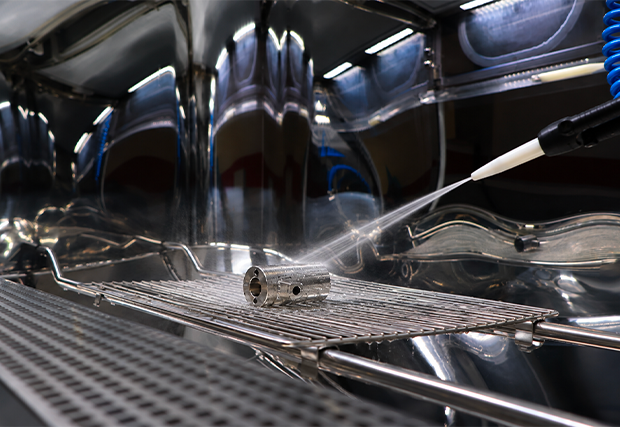
Extraction of contaminants
The particles are removed from the part using an extraction method suited to its geometry, such as pressure rinsing, rinsing of internal circuits, ultrasound or agitation.
Several techniques can be combined depending on the areas to be inspected and the cleanliness level required.
Filtration
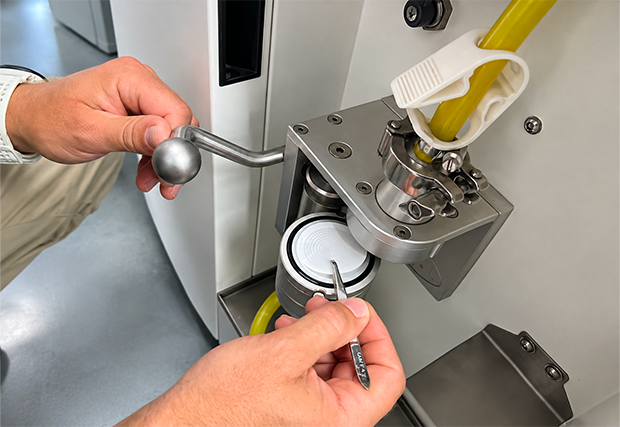
The liquid used for extraction is filtered through a membrane in order to collect the contaminants present on the part.
Particle analysis
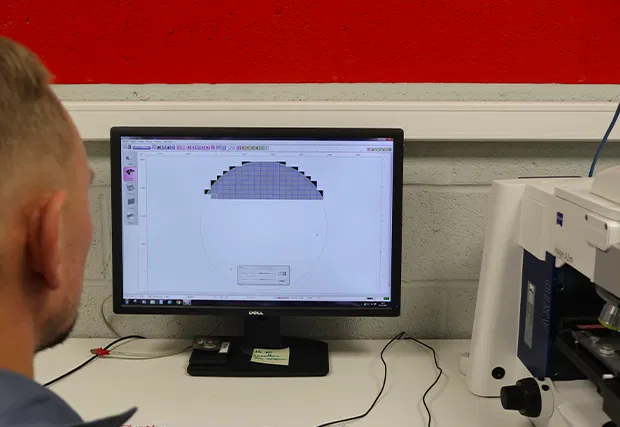
Depending on the criteria to be checked, the analysis makes it possible in particular to determine:
- the total mass of contaminants;
- the number of particles;
- their size;
- the size of the largest particle;
- their metallic or non-metallic nature.
Two methods can notably be used:
- gravimetric analysis, which measures the total mass of the contaminants collected from the part;
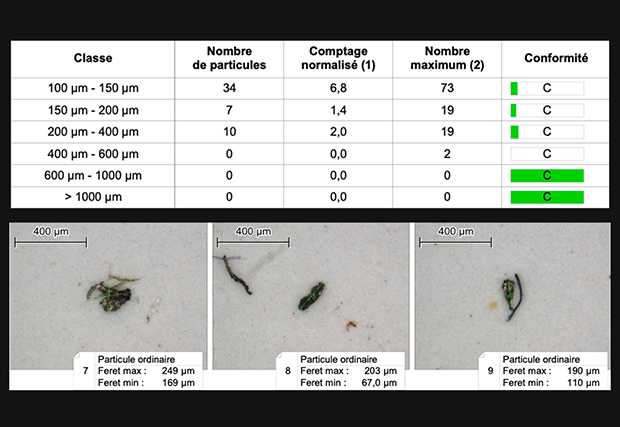
- particle size analysis, which counts and classifies the particles according to their size and nature.
The results obtained are then compared with the cleanliness criteria defined for the part.
How does MecanoLav help you meet your cleanliness criteria?
We support you from the pre-project stage to define a cleaning process that is reliable, reproducible and suited to your production.
Analysis of your needs
Our teams notably study:
- the geometry and material of the part;
- the critical areas to be cleaned;
- the nature of the contaminants;
- the production rate;
- the required cleanliness level;
- the expected result after cleaning.

Tests on your parts
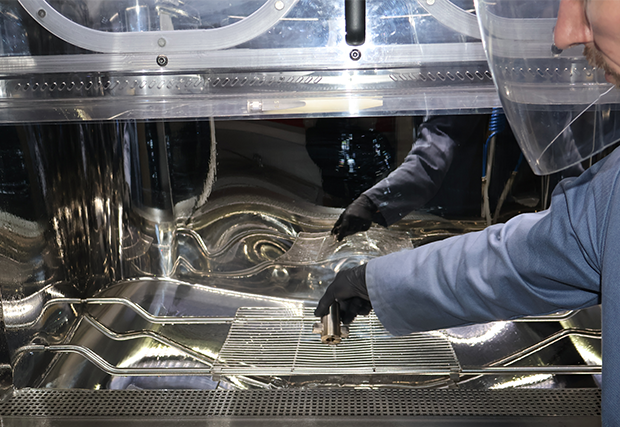
Tests can be carried out on your own components in order to select the most suitable parameters:
- cleaning chemistry;
- temperature;
- pressure and flow rate;
- cycle time;
- nozzle positioning;
- filtration;
- rinsing;
- blow-off and drying.
Process validation
The results make it possible to check that the process meets the expected cleanliness level.
Depending on the project, the checks may include gravimetric analysis, particle size counting and additional surface cleanliness checks.
Machines suited to cleanliness requirements
Our machines can integrate various equipment to control cleaning quality:
- fine filtration;
- bag or cartridge filters;
- oil separation;
- temperature and pressure control;
- chemistry dosing;
- rinsing and drying suited to the part.
The choice of technology depends on the geometry of the part, the nature of the contaminants, the production rate and the cleanliness level required.
An industrial cleaning project?
Tell us about your needs. Our teams will help you define a solution suited to your parts and your production.


